
Life Insurance

Protect What Matters Most

Because Life Is Uncertain—But Their Future Doesn’t Have to Be

If someone depends on you financially, you are most likely someone who needs life insurance. Life insurance provides cash to your family or loved ones after your death. This cash, known as the death benefit, replaces your income and the many non-paid ways you support your household. Your family can use this cash to pay for expenses like funeral costs, a mortgage, college tuition and more.

Here are just a few examples of people who often say 'yes' when asked, 'Should I get life insurance?':
  • Married couples
  • Married couples with kids
  • Single parents
  • Stay-at-home parents
  • Empty nesters
  • Retirees
  • Business Owners
  • ,

Leave a meaningful legacy

What type of life insurance is right for you?

Life insurance isn’t one-size-fits-all. The right policy depends on your goals, budget, and stage of life. Most policies fall into two main categories: term life insurance, which provides coverage for a specific period, and whole life insurance (also known as permanent insurance), which offers lifelong protection with added benefits. Understanding the differences can help you make the best choice for your future, and your family’s peace of mind.

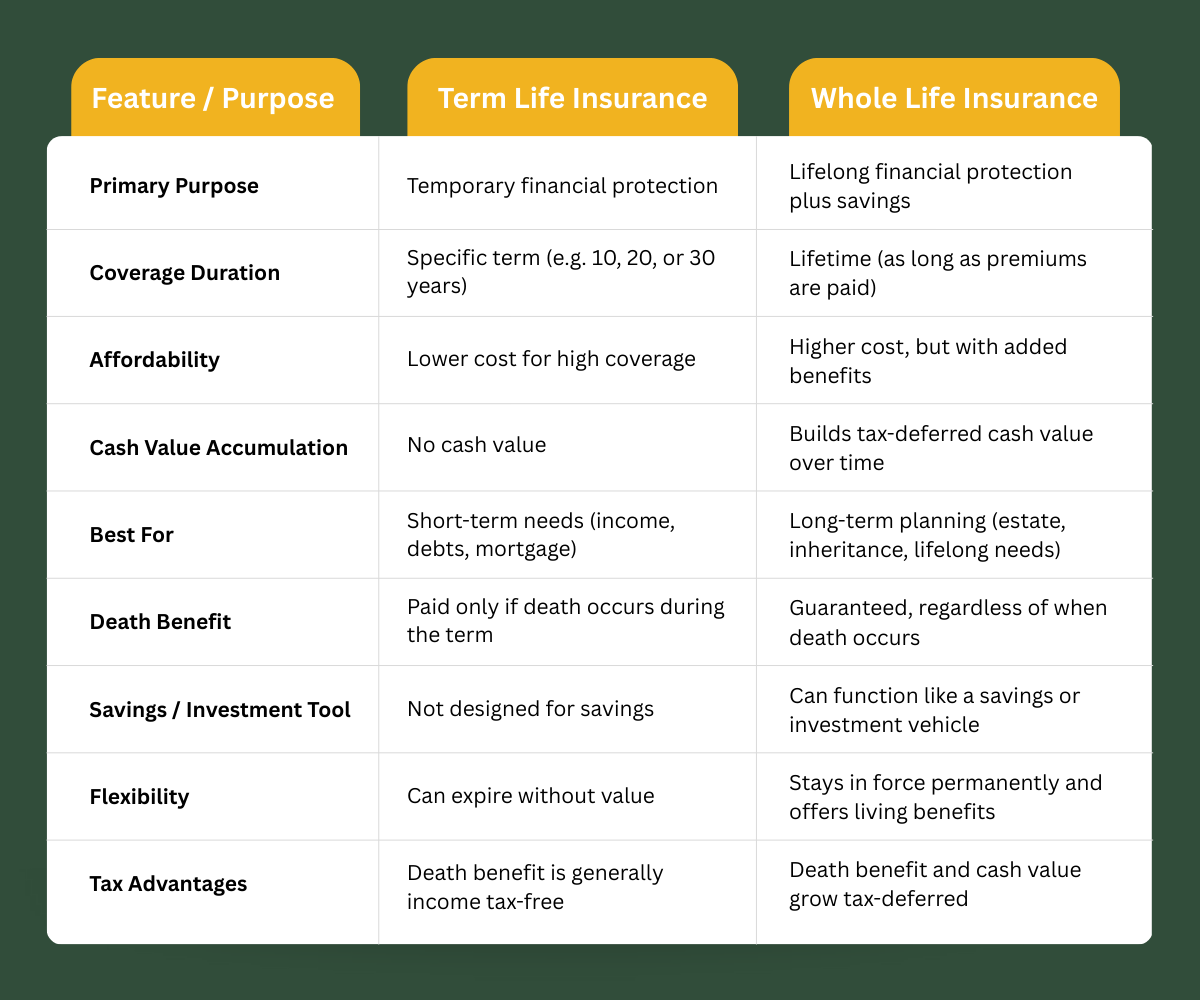
Table comparing Term Life vs. Whole Life Insurance: Term offers temporary, low-cost coverage with no cash value; best for short-term needs. Whole Life provides lifelong coverage, higher cost, builds tax-deferred cash value, and suits long-term planning.

Term Life Insurance

Term life insurance offers affordable coverage for a set period—often 10, 20, or 30 years. With lower premiums and no cash value, it’s a practical choice for budget-conscious buyers needing short-term protection.

Explore the different term types and find the plan that fits your current needs.

Whole Life Insurance

Whole life insurance provides lifetime coverage and builds cash value over time. Though premiums are higher, they’re typically fixed—making this a strong option for those seeking long-term security and investment.

Learn about how it works and whether it aligns with your financial strategy.

Answers to Your
Top Questions

What’s the difference between term and permanent life insurance?

Term life insurance provides coverage for a specific time period (e.g., 10, 20, or 30 years).
Permanent life insurance offers lifelong coverage and builds cash value over time.

Yes. We partner with multiple carriers to find options that consider your health history and may still offer quality coverage.

Term life is generally more affordable because it offers temporary protection without cash value.
Permanent life has higher premiums but includes long-term benefits and a savings component.


Yes, many term policies offer a conversion option that lets you switch to permanent coverage—no medical exam needed in most cases.

Yes—permanent policies stay in place for your lifetime, as long as premiums are paid.

Cash value is a savings component that grows tax-deferred. You can borrow against it or use it for future needs.

Term is ideal for:

  • Young families
  • Homeowners
  • People with short- to mid-term financial responsibilities

Permanent is best for:

  • Long-term planners
  • Individuals with estate planning needs
  • Those wanting to build wealth or leave a legacy

Term life does not pay out if you outlive the policy.
Permanent life pays a death benefit no matter when you pass, as long as the policy is active.

It depends on your budget, goals, and how long you need coverage. We’re here to help you choose the best fit.

Let’s Get You Covered

Ready to find the right insurance? Our team is here to guide you every step of the way.